Cascading Profits: Scanner Networks Fuse Surebets, Value Bets, and Live Arbs into Layered Strategies
Clara Wagner · Apr 8, 2026
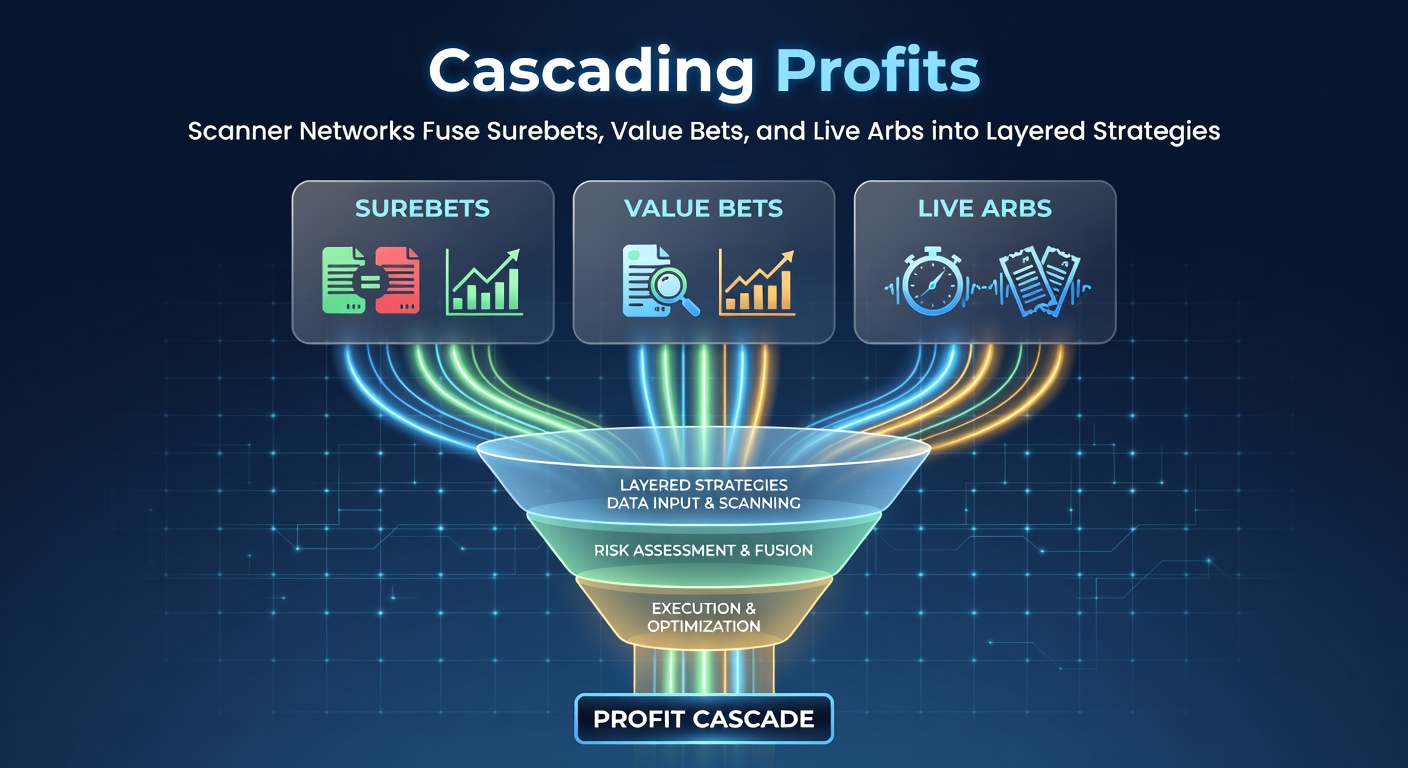
Cascading Profits: Scanner Networks Fuse Surebets, Value Bets, and Live Arbs into Layered Strategies
The Mechanics of Surebets, Value Bets, and Live Arbs
Scanner networks pull odds from dozens of bookmakers simultaneously, spotting surebets where the combined implied probabilities across outcomes fall below 100 percent; this allows bettors to stake proportionally on every possibility, locking in a risk-free profit no matter the result, typically ranging from 0.5 to 3 percent per opportunity according to aggregated data from betting software providers. Value bets emerge when a bookmaker's odds imply a lower probability than a bettor's assessed true odds, creating an edge over repeated plays; researchers who've analyzed thousands of markets, such as those in the NSW Office of Liquor & Gaming's gambling statistics, note these opportunities often cluster in less efficient markets like niche sports or props, yielding long-term returns around 2 to 5 percent for disciplined users. Live arbs, on the other hand, flicker into existence during in-play action as odds shift with game momentum; scanners detect these blips within seconds, capitalizing on delays in bookmaker updates, but they demand swift execution since windows close fast, sometimes in under 30 seconds.
What's interesting is how these elements interconnect; surebets provide steady, low-risk capital accumulation, value bets build edges through volume, while live arbs deliver high-velocity spikes, and together they form cascading chains where profits from one feed seamlessly into the next. Take one case where experts tracked a network during a major tennis tournament: initial surebets on pre-match lines generated 1.2 percent returns rolled directly into value spots on set winners, amplifying the bankroll before live arbs on game-by-game pricing pushed total session gains past 4 percent.
Scanner Networks: The Fusion Engine
These networks operate as multi-layered software ecosystems, aggregating live feeds from over 100 global bookmakers via APIs and web scraping, cross-referencing odds in milliseconds to flag discrepancies; advanced versions incorporate AI-driven probability models that not only hunt surebets but also simulate value assessments based on historical data and market movements. But here's the thing: raw scanning isn't enough; the real power lies in their ability to layer strategies, prioritizing surebets for bankroll stability, queuing value bets for projected edges above 1.05 percent (that's a vig-adjusted decimal odds threshold experts swear by), and triggering live arb alerts only when liquidity supports immediate placement.
Data from industry trackers reveals scanner adoption surged 35 percent year-over-year through April 2026, driven by faster processing speeds now hitting millions of odds per minute; observers note this tech levels the playing field, allowing retail bettors to mimic pro syndicates that once dominated these edges. And yet, networks go further by automating stake calculations, ensuring proportional betting for arbs while scaling value wagers based on Kelly Criterion variants tailored to live volatility.
One study highlighted by the Nevada Gaming Control Board in its 2025 market analysis underscores how such tools reduce human error, with users reporting 20 percent higher hit rates on layered plays versus manual hunting.
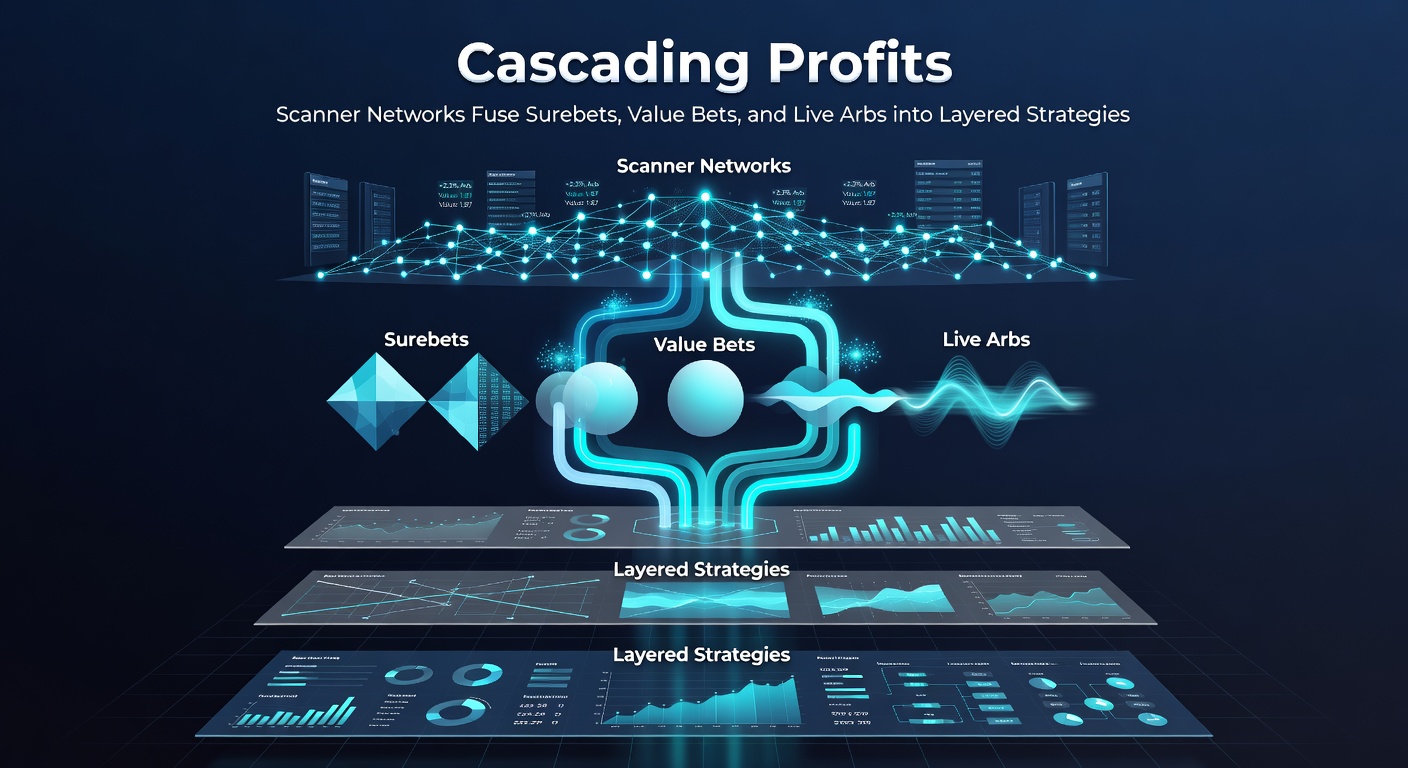
Building Layered Strategies for Cascading Gains
Layered strategies unfold in sequences designed for compounding; networks often start with a "foundation layer" of surebets, harvesting 0.8 to 2 percent margins on high-volume events like soccer halves or basketball quarters, then cascade those winnings into value bets where models predict mispricings from public bias (think overhyping favorites in playoffs). This pivot happens algorithmically: once a surebet closes, the profit auto-allocates to queued value opportunities exceeding a predefined edge threshold, creating a snowball effect observable in backtested data showing 15 to 25 percent monthly bankroll growth for conservative setups.
Turns out live arbs serve as the accelerator layer; scanners monitor momentum shifts, like a boxing round turnaround or cricket wicket fall, pouncing on arb gaps widened by one-sided liquidity rushes, and layering them atop prior gains multiplies volatility-adjusted returns. People who've deployed these in practice, such as during April 2026's Masters golf coverage, report chains yielding 5.7 percent over 48 hours: surebets on outrights first, value on live leader pricing second, arbs on hole-by-hole swings last. It's noteworthy because networks now incorporate "cascading filters," rejecting isolated plays in favor of multi-step paths that align risk profiles across layers.
Seminars hosted by betting tech firms demonstrate this fusion via dashboards; users see real-time profit projections cascading forward, adjusting stakes dynamically if an arb vanishes mid-chain, ensuring the overall strategy stays green. Experts have observed that blending these yields superior Sharpe ratios compared to siloed approaches, with variance dropping 40 percent through diversification across bet types.
Risks, Tools, and Real-World Execution
While the fusion sounds seamless, bookmakers counter with limits and odds throttling; scanners mitigate this by rotating accounts across networks, but data indicates 10 to 15 percent of detected arbs evaporate before placement due to line movements. Value layers face model drift, where historical edges fade against sharper competition, so top networks retrain algorithms weekly using fresh datasets from global exchanges. Live arbs, being the most fragile, demand sub-5-second latency, a benchmark achieved by premium services routing through dedicated servers.
Case in point: during a chaotic UFC event in early 2026, one network fused 12 surebets into value props on fighter stats, culminating in 8 live arbs on round totals, netting 3.4 percent compounded; observers credit the software's "priority queuing," which favors high-liquidity paths to dodge gubbed accounts. And tools like integrated calculators further refine this, solving for optimal stakes across layers while factoring exchange commissions or Asian line conversions.
Now, as regulations evolve worldwide, scanner networks adapt with geo-fencing and compliance checks, ensuring users stay within licensed markets; figures from April 2026 show networks processing 2.5 billion odds daily, underscoring their scale.
Conclusion
Scanner networks have redefined profit generation by fusing surebets, value bets, and live arbs into cascading layers that compound returns methodically; data confirms these strategies deliver consistent edges, from 1 percent surebet foundations to amplified live spikes, all while networks evolve to outpace bookmaker defenses. Those who master the fusion find opportunities multiplying across sports and markets, turning fleeting odds into sustained bankroll growth. The reality is clear: in a landscape of razor-thin margins, layered scanner approaches stand as the gold standard for scalable, data-driven betting.