When Milliseconds Matter: Examining Precision Timing in Automated Discrepancy Detection Across Betting Networks
Eden Griffin · Jul 19, 2026
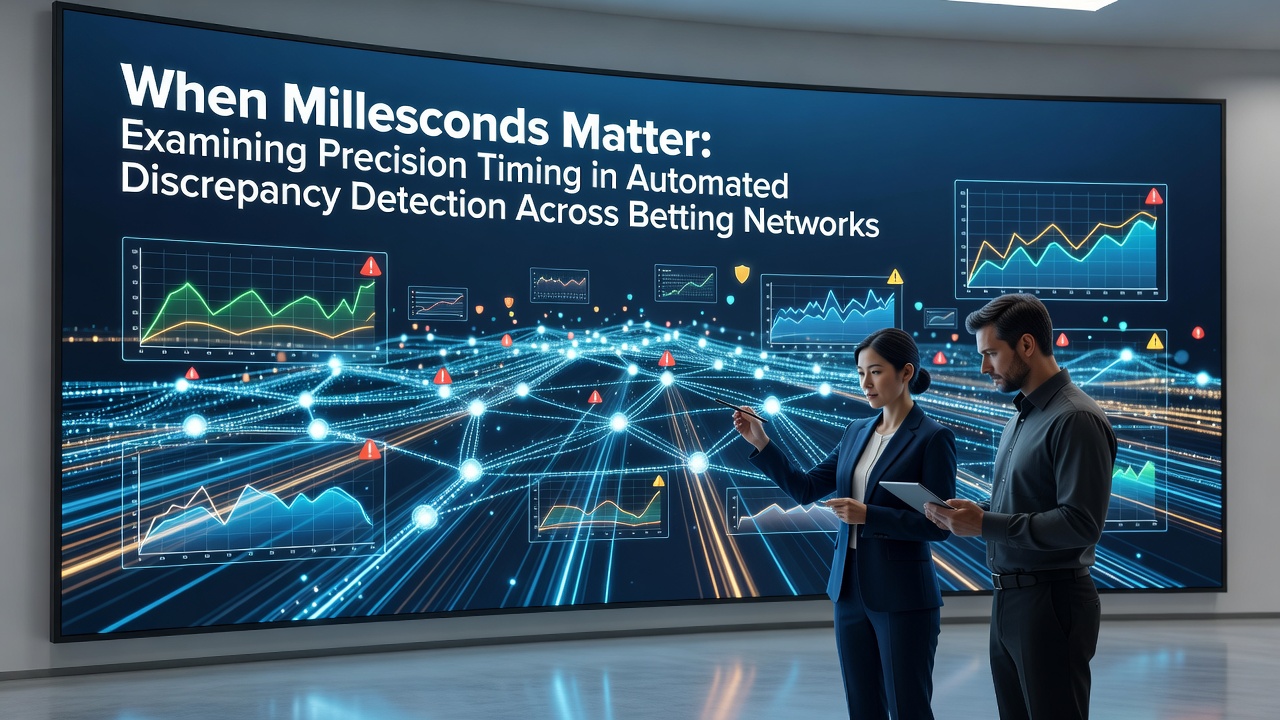
When Milliseconds Matter: Examining Precision Timing in Automated Discrepancy Detection Across Betting Networks
Automated discrepancy detection in betting networks relies on systems that compare odds across multiple platforms within tight time windows, where delays measured in milliseconds can determine whether an opportunity exists or vanishes, and researchers tracking these processes note that data feeds from bookmakers and exchanges update at irregular intervals that vary by operator infrastructure.
Core Mechanisms Behind Real-Time Odds Comparison
Systems pull live odds through APIs that transmit updates at frequencies ranging from several times per second on major exchanges to once every few seconds on smaller operators, and the detection software parses these streams to identify price differences that exceed transaction costs while accounting for stake limits and settlement rules. Observers note that synchronization protocols must align timestamps from disparate sources because clock drift between servers introduces errors that accumulate when networks span multiple geographic regions.
Algorithms employ sliding window comparisons that retain recent data points for several hundred milliseconds, allowing cross-checks against historical volatility patterns, yet this approach demands continuous recalibration when market conditions shift rapidly during live events.
Latency Sources and Their Cumulative Effects
Network latency arises from physical distance between data centers, routing inefficiencies, and processing queues at each bookmaker endpoint, while internal system delays occur during odds calculation engines that batch updates rather than push every change instantly. Data from industry monitoring services shows average round-trip times between European and Asian betting platforms often exceed 80 milliseconds under normal load, and spikes during peak event periods push these figures higher.
Those studying automated detection emphasize that packet loss and retransmission further erode the usable window, forcing scanners to discard stale quotes that no longer reflect current market states, and this filtering step itself consumes additional processing cycles that compound the original timing challenge.
Impact of Data Feed Architecture on Detection Windows
Push-based feeds deliver changes as they occur and minimize buffering delays, whereas pull-based APIs require repeated requests that introduce polling intervals chosen by the scanner operator, and the choice between these models affects both detection speed and server load on the data provider side. Studies of similar real-time financial systems indicate that hybrid approaches, which combine initial polling with subscription updates after the first match, reduce average latency by 30 to 40 percent compared with pure polling strategies.
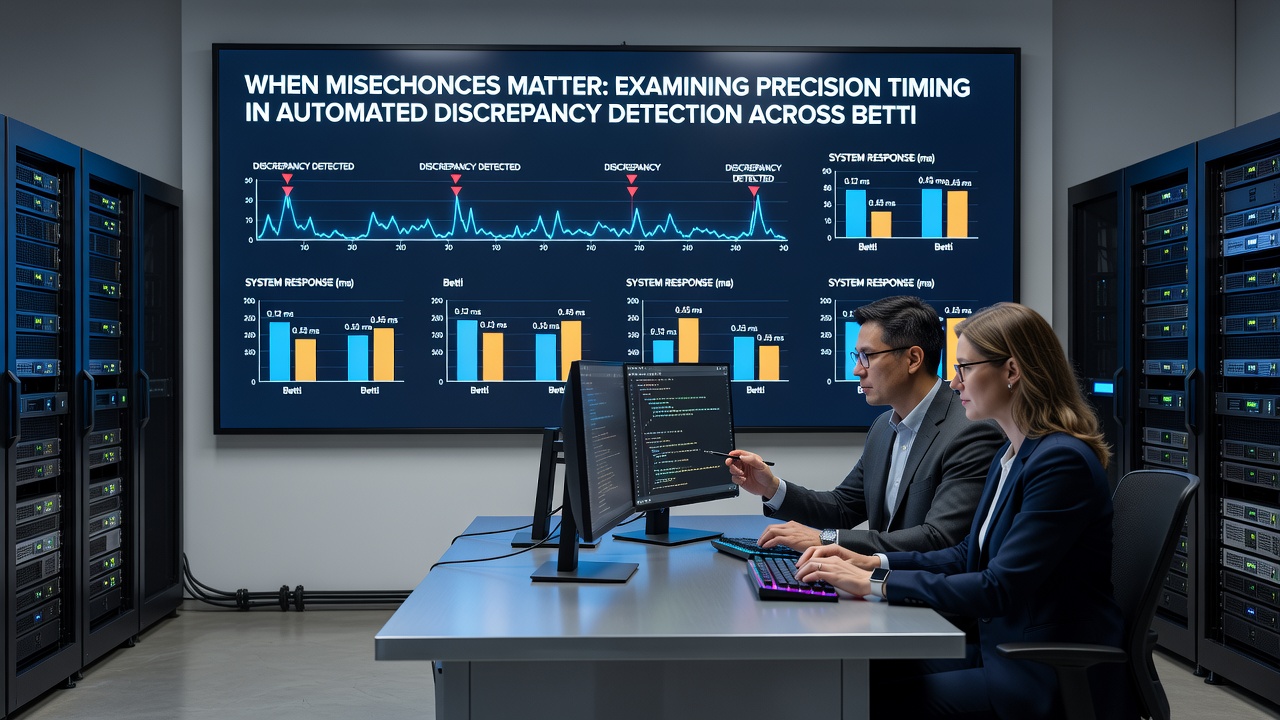
Technological Adaptations in July 2026
By July 2026, several networks had deployed edge computing nodes closer to major betting data hubs to shave transmission times, and reports from technology providers indicate that these nodes perform preliminary discrepancy checks before forwarding candidate opportunities to central servers for final validation. Machine learning models trained on historical odds movement data now predict when certain bookmakers are likely to refresh prices, allowing scanners to prioritize polling those endpoints during predicted windows rather than maintaining uniform request rates across all sources.
Co-location arrangements with exchange operators grant direct fiber connections that cut latency to single-digit milliseconds for subscribed participants, yet such access remains limited to larger operations that meet volume and compliance thresholds set by the platform operators themselves.
Cross-Network Synchronization Challenges
Detecting discrepancies across bookmakers and exchanges requires mapping equivalent markets despite differing naming conventions, handicap structures, and settlement rules, and this mapping layer must execute without adding measurable delay to the core comparison pipeline. Researchers at institutions examining algorithmic trading have documented that even minor mismatches in market identification can produce false positives that waste execution attempts and erode capital efficiency over time.
Time zone handling adds another variable because events scheduled in one region generate activity spikes that overlap with maintenance windows in another, and automated systems must adjust polling schedules dynamically to avoid querying endpoints during known downtime periods.
Regulatory and Infrastructure Considerations
Authorities in multiple jurisdictions track the growth of automated betting tools through licensing requirements that mandate logging of all data requests and decision timestamps, creating audit trails that span several years. Figures released by the Australian Communications and Media Authority reveal increased scrutiny on latency claims made by service providers, with verification programs testing actual round-trip performance under controlled conditions.
Those implementing these systems often integrate with third-party time synchronization services that reference atomic clocks to maintain consistent internal timestamps across distributed scanner instances, and this practice reduces discrepancies caused by server clock skew that would otherwise accumulate across multi-hour operation periods.
Conclusion
Precision timing remains central to automated discrepancy detection because the underlying data environment changes continuously and the economic value of each opportunity decays within narrow temporal bounds. Advances in edge processing, predictive scheduling, and standardized time references have narrowed the performance gap between leading and trailing systems, yet the fundamental constraint of network physics continues to shape what remains detectable in practice. Operators and researchers alike continue to refine measurement techniques that quantify end-to-end latency from quote generation to execution confirmation, providing clearer benchmarks for ongoing system improvements across betting networks.